
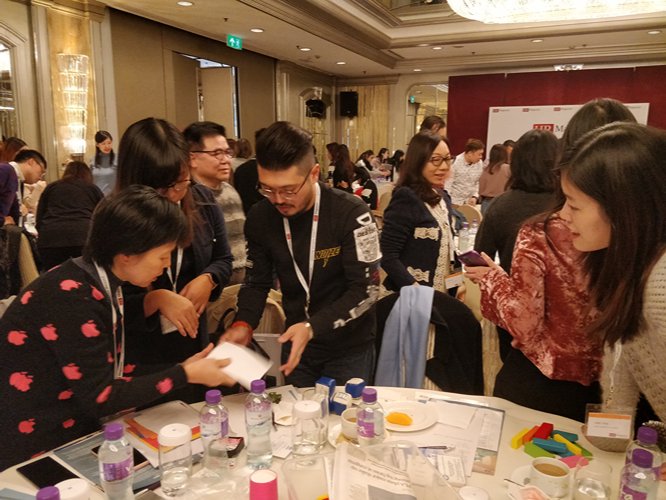
Inclusive teams make participation easier by design.
People are more likely to contribute when they understand the goal, have enough time to think and can choose a way of participating that draws on their strengths. When those conditions are built into a team experience, a wider range of perspectives can shape the result.
This matters because inclusion is more than inviting different people into the room. It is about whether those people can take part, influence decisions and recognise their contribution in the final outcome.
Inclusion shows up in small design choices
A team activity can look open to everyone while still favouring a narrow type of participation.
Fast discussions may reward people who process information aloud. Highly physical tasks may give some participants fewer ways to contribute. Unstructured decision-making can allow the most confident voices to set the direction before others have considered the question.
Inclusive design begins by asking practical questions:
Do participants know what they are working towards?
Is there more than one useful role?
Do people have time to think before responding?
Can participants contribute through ideas, observation, planning, building or reflection?
Does the final decision reflect input from across the group?
These choices affect who feels able to step forward and whose contribution influences the team.
Give people time to think
Different people process information in different ways. Some form ideas through discussion. Others prefer to absorb the information, consider the possibilities and then respond.
A simple pause before a group discussion can improve the quality and range of ideas shared. Facilitators can also invite participants to consider a question individually or in pairs before opening it to the wider group.
This does not slow collaboration down. It helps the team collect stronger input before deciding where to go.
The same principle applies in the workplace. Sending an agenda in advance, sharing context before a meeting or giving people a moment to write down their thoughts can help more colleagues take part with confidence.
Offer more than one way to contribute
Participation does not need to look the same for everyone.
Within one shared challenge, some people may interpret information, test ideas or notice patterns. Others may organise resources, explain the plan, build a solution or monitor progress.
An inclusive team experience makes these contributions visible and valuable. It avoids presenting one role, such as speaking first or leading from the front, as the only sign of engagement.
This gives participants room to discover how their strengths support the wider team. It also helps colleagues recognise contributions they might overlook during everyday work.
Make the goal and the process clear
Clarity supports inclusion.
When participants know the objective, the available resources and how decisions will be made, they can find a meaningful way into the task. When instructions or success criteria remain unclear, people with prior knowledge or greater confidence often gain an early advantage.
Clear facilitation gives everyone the same starting point. It can include:
Explaining the purpose and rules in accessible language
Demonstrating a task rather than relying only on verbal instructions
Checking understanding before the activity begins
Defining roles without limiting people to them
Creating a clear process for questions and decisions
For multilingual teams, facilitators may also need to adjust their pace, avoid unnecessary jargon and confirm that key information has been understood.
Team Building Asia supports multilingual facilitation across Hong Kong, Macau, Mainland China and Singapore, helping organisations create experiences that work for their participants and context.
Mix teams with intention
Group composition affects who interacts and whose ideas are heard.
Teams can be mixed across functions, seniority levels, locations or areas of expertise. This creates opportunities for participants to work with colleagues outside their usual circles and see how different perspectives contribute to a shared goal.
Facilitators should also consider how people move between roles. If the same participant explains every decision, operates every piece of equipment or takes responsibility for every negotiation, the team has fewer opportunities to learn from one another.
Rotating responsibilities gives more people direct experience of contributing, listening and adapting.
Build inclusion into decision-making
A team can collect many ideas and still allow only a few people to make the final decision.
Inclusive decision-making connects participation with influence. Teams need a clear way to review different perspectives before committing to an approach.
This might involve asking each participant to share one observation, comparing several proposed strategies or assigning someone to check what the group may have missed. The aim is not to make every decision unanimous. It is to ensure that relevant perspectives are considered.
This practice becomes especially valuable under pressure. When time is limited, teams often return to familiar habits. A structured process helps them maintain inclusive behaviour when the pace increases.
Use reflection to turn participation into learning
A facilitated debrief helps participants connect what happened during an experience with how their team works.
Useful questions include:
Whose contribution changed the team’s direction?
What helped people speak or step forward?
Which strengths became visible during the task?
How did the team respond when different views emerged?
What would make participation easier in everyday meetings and projects?
The debrief should create space for several people to respond. Pair reflection, written prompts and small-group discussion can all help collect a wider range of observations.
The goal is to identify one or two behaviours the team can apply after the experience. Examples might include circulating questions before meetings, rotating the role of discussion lead or asking for different perspectives before confirming a decision.
Practise inclusive behaviour through shared experience
A facilitated experience can make inclusion visible in ways that a presentation alone cannot.
In Integrity, teams work through a series of problem-solving challenges while considering communication, fairness, feedback and accountability. Participants need to exchange perspectives, make decisions and reflect on how their behaviour affects others.
The value comes from what the experience helps the team notice. Who shaped the plan? How was feedback received? Did the group make room for different approaches? What happened when fairness and performance had to be considered together?
These observations give facilitators a practical starting point for conversations about values, culture and inclusive decision-making.
Organisations exploring this outcome can also visit Team Building Asia’s Diversity & Inclusion experiences or learn how the Learning & Development solution connects facilitated activities with workplace behaviour.
Start with one inclusive habit
A team does not need to redesign every process at once.
Start with one repeated moment where participation matters, such as a weekly meeting, project review or planning session. Identify one design choice that would help more people contribute.
That might mean sharing the question in advance, collecting ideas before discussion, rotating responsibilities or ending with a round in which each person can add an observation.
Small habits shape the experience of being part of a team. When participation is clear, varied and meaningful, people have more opportunities to bring their perspective, recognise one another’s strengths and contribute to shared success.
To explore an inclusive experience designed around your team, book a discovery call with Team Building Asia.
Frequently asked questions
What makes a team building activity inclusive?
An inclusive team building activity gives participants clear and varied ways to contribute. It considers physical access, language, thinking time, group composition, roles and how decisions are made.
How can facilitators encourage quieter participants?
Facilitators can allow individual thinking time, use pair or small-group discussion, rotate responsibilities and invite observations without putting participants under unnecessary pressure.
Can inclusive team building support multilingual teams?
Yes. Clear language, visual demonstrations, an appropriate pace and multilingual facilitation can help participants understand the task and contribute confidently.
How should an organisation choose an inclusive activity?
Begin with the intended outcome and the needs of the participants. Consider accessibility, language, group size, location, preferred level of physical activity and the behaviours the team wants to practise.