
A fruit bowl, wellness app, or occasional workshop can add something positive to the employee experience.
The habits a team practises every day determine whether wellbeing remains visible when the week becomes busy.
Team wellbeing grows through the way colleagues discuss workload, respond when someone asks for support, and create opportunities to connect. These behaviours shape whether people feel able to contribute sustainably and speak before pressure becomes difficult to manage.
This makes Wellbeing a shared team practice.
Three habits can help organisations bring it into everyday work.
Perks create moments, habits shape culture
A perk is something an organisation provides. A habit is something people repeatedly do.
Both can contribute to a positive workplace, but they play different roles.
A wellbeing initiative may create awareness, introduce a useful resource, or give people time to reset. Team habits determine what happens when a deadline moves, priorities compete, or someone needs support.
These habits are often small:
- A manager asks about capacity before assigning another task.
- A colleague requests help while there is still time to respond.
- The team notices effort as well as output.
- People make room for a conversation that has no status update attached.
- A leader models a healthy boundary without making others justify theirs.
Repeated behaviours communicate what the team values.
When wellbeing is supported through everyday actions, employees do not need to wait for a formal initiative before discussing what they need.
Habit one: check workload openly
A team can appear productive while several people are carrying more than others can see.
An open workload conversation helps make that pressure visible. It gives the team an opportunity to adjust priorities, redistribute work, or clarify where support is needed.
This conversation can be simple:
- What is taking most of your attention this week?
- Where are priorities competing?
- What is at risk if nothing changes?
- What support would make the greatest difference?
- What can be delayed, delegated, or simplified?
The purpose is to understand capacity as a team.
This also makes planning more realistic. Leaders gain a clearer view of what the group can sustain, and employees gain a way to discuss pressure through the work itself.
A workload check should lead to a decision. If the team identifies pressure but every priority remains unchanged, people may stop seeing value in raising it.
Even a small adjustment shows that the conversation has a purpose.
Habit two: ask for help early
Asking for help is easier when it is treated as a normal part of collaboration.
Teams can reinforce this by responding constructively when someone raises a concern, needs clarification, or admits that an approach is not working.
Useful responses include:
- “What would help you move forward?”
- “Who else has information that could support this?”
- “Which part should we solve first?”
- “What can we change while there is still time?”
These questions keep the conversation practical.
Leaders influence this habit through their own behaviour. When they ask questions, acknowledge uncertainty, and seek input, they show that capability includes knowing when to involve others.
Colleagues also play a role. Support becomes part of the culture when people offer useful assistance without taking over, judging, or turning every request into a performance concern.
Early support can prevent a manageable challenge from becoming a larger source of pressure.
Habit three: connect without another meeting
Connection contributes to wellbeing, but another meeting is not always the answer.
Teams need opportunities to interact without every conversation being driven by an agenda, update, or deliverable. These moments help colleagues see one another more fully and strengthen the relationships that make support easier.
Connection might come through:
- A shared challenge
- A short walk or informal conversation
- Celebrating progress together
- A creative activity
- A team lunch with no presentation
- Time to learn something unfamiliar together
The activity matters less than the quality of participation.
People should have room to contribute in different ways, talk with colleagues outside their usual circle, and enjoy a sense of shared progress.
Human connection helps sustainable teams because relationships influence how people communicate, share concerns, and respond to pressure.
Where shared experiences help
A shared experience can bring wellbeing behaviours into view.
When teams step outside their usual roles, they can notice:
- Who checks whether others are included
- How the group responds when someone needs help
- Whether people listen before acting
- How the team handles pressure
- What creates positive energy
- How participants recognise one another’s contributions
A facilitated debriefing helps the team connect these observations with work.
The conversation might explore:
- When did you feel most supported?
- What helped the team maintain its energy?
- How did you make room for different contributions?
- What made it easier to ask for help?
- What should the team continue doing afterwards?
This turns an engaging experience into a practical discussion about culture.
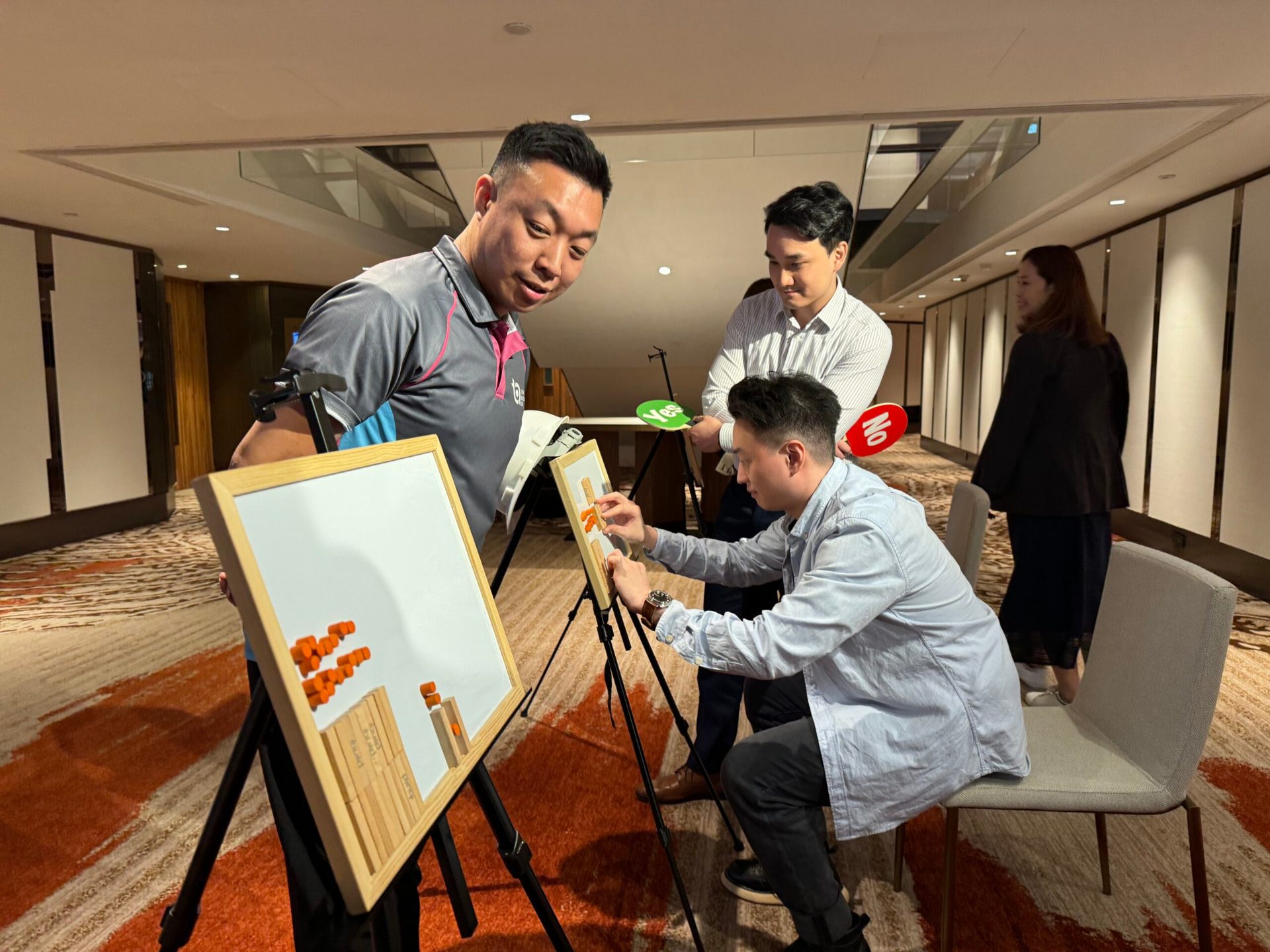
Escape The Maze, for example, gives teams a shared navigation and problem-solving challenge. Participants need to communicate, make decisions, and support one another while working towards a common result.
The value for wellbeing lies in the connection, shared progress, and reflection that surround the challenge.
Where to start
Choose one existing team routine and add a wellbeing habit to it.
During a weekly planning meeting, ask about workload before assigning new priorities. At the end of a project stage, discuss what helped people work sustainably. During a team check-in, ask where support would be useful.
Keep the habit simple enough to repeat.
A team might begin with:
“What is one thing that would help us work well together this week?”
Listen to the answers and agree on one action.
The organisation can then support these everyday habits with wider initiatives, resources, and shared experiences.
Team Building Asia has engaged more than 250,000 participants since 2002. Across those experiences, the strongest learning often comes from giving people something practical to do together and time to reflect on what it revealed.
Wellbeing grows when support becomes visible in the way a team works.
Start a discovery call to discuss an experience aligned with your team’s wellbeing and connection goals.